Penetration sealing in Bedford
Every cable, pipe and duct through a fire wall is a hole. We close the space round it.
Get a priceA penetration is anything that goes through a wall or floor. A cable. A pipe. A length of conduit. A duct.
When the service goes in, somebody drills or cuts a hole a bit bigger than it needs. The space left over is the problem.
In a fire, that space is a route for hot gas and flame to move from one room to the next, long before the wall itself has failed.
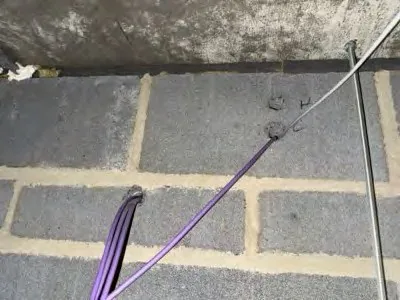
Match the product to the opening
There is no single answer. What goes in the gap depends on the wall or floor, the size of the opening and what is passing through.
A few of the ones we see.
Cables through a block wall. The gap is packed and sealed with something that swells when it gets hot and closes up what is left.
A metal pipe through a masonry wall. A coated board or batt is packed round it and coated.
A bundle of cables in a tray running through a wall. A larger opening, often with a lot of cable and little room. We might use board and sealant, or a pillow that fills the space and can be opened later when more cable is added.
Plastic pipes are a different story. See fire collars and wraps.
Why tested products matter
A product only counts as fire stopping when it has been tested in a wall or floor of the same kind, with the same sort of service going through.
That is why builders' foam from a van is a risk. It may look neat. It has not been tested for your wall. There is a short note on that in expanding foam.
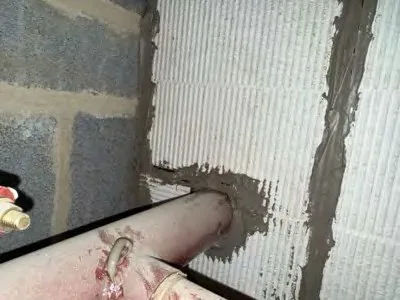
What you get at the end
Every opening photographed before and after, and a list showing which products went where.
Keep that list. When the next cable goes through the wall, whoever fits it should seal behind themselves, and the list tells them what to use.
Marking the holes
On a big job we mark each opening before work starts, usually with a pen or a sticker and a number. That is how a gap in a riser on the fourth floor ends up matching the line in the report.
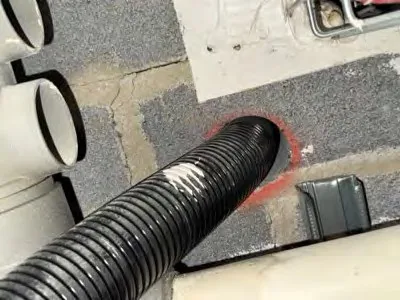
Who does the work
The sealing is carried out by our BM TRADA / FIRAS-certificated contractors. We arrange it, manage the day and check the finish.
Getting a price
Send the survey, or the part of a fire risk assessment that mentions fire stopping. Or just photos of what you can see.
We price by opening and by access, so tell us whether the work is in a corridor, a riser or a roof void.
Questions we get asked
Can you seal while the building is occupied?
Often yes. Corridors and risers can be done with residents at home, with notice. Work inside flats needs access, which means appointments.
What if more cables are added later?
The seal has to be opened and made good again. Don't leave a hole.
Tell us the building, how many floors and what has been found. We will say what we need to see and give you a rough estimate.
Get a price